Blogs
Two Assets You Should (Almost) Never Use to Pay Off Debt
Submitted by the Bond & Botes Law Offices - Friday, September 25, 2020
Financial stress and pressure from debt collectors can create a sense of urgency that isn’t always productive. The urge to get a creditor off the phone, stop the threatening phone calls, eliminate the possibility of a lawsuit and otherwise dial down the pressure makes many people reach for the first available release valve. Too often, that means a dangerous financial decision that will ultimately do more harm than good.
A New Adventure For Bond & Botes Law Offices Alum, Wm. Joey Schiffman
Submitted by the Bond & Botes Law Offices - Thursday, September 24, 2020
Over the past 30+ years, Bond & Botes has been blessed with attorneys who are skilled not only in the practice of bankruptcy law, but in the very machinations that improve the experience for all involved. Wm. Joey Schiffman is one such attorney.
A graduate of Samford’s Cumberland School of Law in 2012, Joey went on to gain his Master of Laws in Taxation from Boston University. From there, he was a Staff Attorney for the New York State Supreme Court Appellate Division until making his way back to his home state of Alabama.
Can I Pay Back Family Before I File Bankruptcy?
Submitted by the Bond & Botes Law Offices - Wednesday, September 23, 2020
The short answer is “no,” but there’s some good news, too. Before we jump into the options you do have for making things right with a friend or family member when you file bankruptcy, let’s look at the general rules for repayments leading up to a bankruptcy filing and how “insiders” are treated differently.
Delays, Uncertainty Plague Unemployment Applicants
Submitted by the Bond & Botes Law Offices - Tuesday, September 15, 2020
In July, the U.S. unemployment rate was 10.2%--an improvement over April-June rates, but a dramatic increase from the beginning of the year. In February, the nationwide unemployment rate was just 3.5%.
Best Wishes To Bond & Botes Law Offices Alum, Monica Blanding, On Her New Role
Submitted by the Bond & Botes Law Offices - Tuesday, September 8, 2020
Over the past 30+ years, Bond & Botes has been blessed with passionate attorneys who counsel their clients through trying times with care and attentiveness. Monica Blanding is a prime example of the passion and empathy we aim to embody as trusted partners in this practice area.
New Payday Loan Protections Revoked by the Consumer Financial Protection Board
Submitted by the Bond & Botes Law Offices - Tuesday, September 1, 2020
Payday lending has long been controversial. While payday loan providers bill themselves as an important safety net for people in need of quick cash to cover unexpected expenses, these high-interest loans can be a trap for consumers--typically, the consumers who can least afford it.
U.S. Supreme Court Extends TCPA Consumer Protections
Submitted by the Bond & Botes Law Offices - Thursday, August 20, 2020
In a somewhat surprising opinion issued in early July, the United States Supreme Court ruled that certain protections under the Telephone Consumer Protection Act (TCPA) extend to those who owe government debts, such as federal student loans. Previously, while the TCPA prohibited most telemarketers and debt collectors from placing auto-dialed calls to cell phones, there was an exception for those collecting debts on behalf of the government.
Poverty and the Pandemic: Surprising Trends
Submitted by the Bond & Botes Law Offices - Tuesday, August 11, 2020
Most Americans are concerned about the impact of the pandemic and related shutdowns and business closures on the U.S. economy, and on their local economies and personal finances. State and federal government officials speak regularly about weighing the direct health risks of Covid-19 against the fallout from economic conditions created by extensive precautions.
Cosigners and Bankruptcy: What You Need to Know
Submitted by the Bond & Botes Law Offices - Wednesday, July 29, 2020
Many people have difficulty qualifying for credit because they don’t have a credit history, or that history has black marks on it. Others in this situation may qualify for credit, but with an out-of-reach down payment and higher fees and interest. The option of using a cosigner can be critical for people without established credit or with low credit scores to purchase cars, take out loans to cover emergency expenses, and meet other needs. A cosigned loan can also help establish or rebuild credit.
Could your Rent-to-Own Store Send You to Jail?
Submitted by the Bond & Botes Law Offices - Monday, July 27, 2020
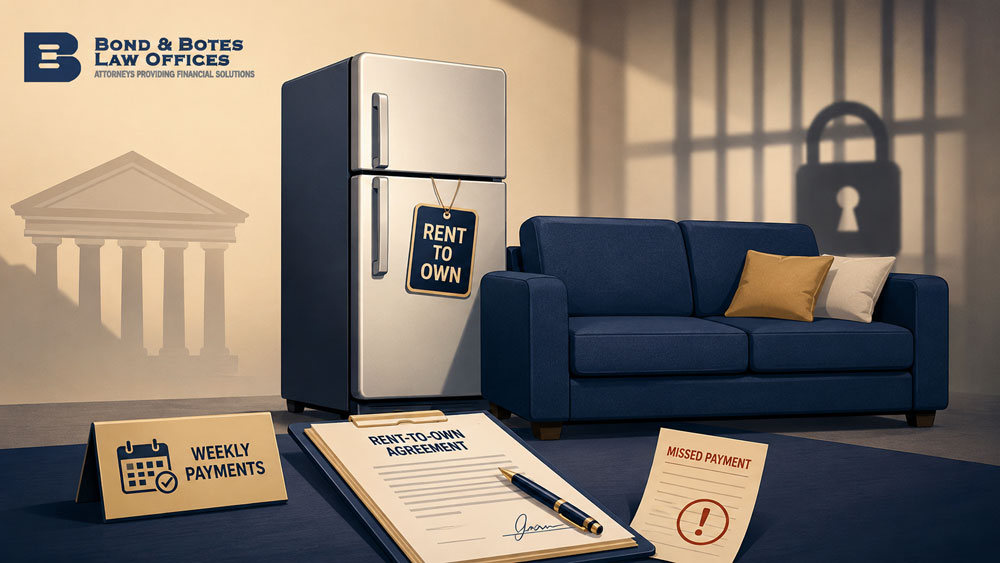
When you’re in need of a medium-ticket item like an appliance or a new couch and can’t afford to buy it outright, rent-to-own might look like the perfect solution. On the surface, it looks a lot like buying the item on credit, but it’s much more accessible to people who might not qualify for conventional financing. That’s why rent-to-own services often appeal to people with lower incomes and not-so-great credit histories.